


Many people assume that the most impressive and massive stadiums in the United States are owned by professional National Football League (NFL) teams, such as the Dallas Cowboys or New England Patriots. In reality, the list of the largest sports arenas in the country is dominated overwhelmingly by college-level American football stadiums or NCAA facilities.
This phenomenon is driven by an exceptionally strong alumni loyalty and deeply rooted university sports culture that has been passed down through generations. This unwavering enthusiasm has prompted various universities to construct and renovate their stadiums to accommodate more than 100,000 spectators at every game.
To better understand the American sports landscape, you may want to explore our article on the top 5 most popular sports in the United States, which provides deep insights into the sports culture of this nation.
The 7 Largest Stadiums in the United States by Capacity
Ranking the largest sports arenas requires accurate data sourced directly from relevant institutions, as capacity often changes due to renovation projects. The capacity figures below are based on the most recent official data from each university’s athletic department at the time of last update. Let’s explore the list of these massive arenas that capture the attention of millions of sports fans every fall season.
1. Michigan Stadium
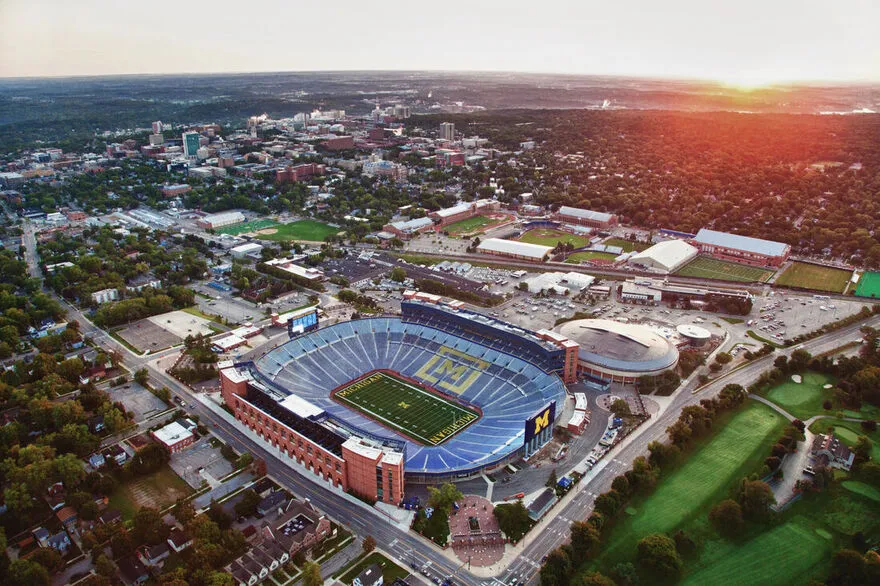
Capacity: 107,601 Spectators
Located in Ann Arbor, Michigan, this pride of the Michigan Wolverines team holds the top position as the largest stadium in the United States. Widely known by its nickname “The Big House,” this stadium set a remarkable attendance record of over 115,000 spectators in 2013 during a game against Notre Dame. Beyond serving as the center of NCAA competitions, this massive facility is also frequently used for international-scale events, such as friendly matches between European clubs like Manchester United and Real Madrid.
2. Beaver Stadium
View this post on Instagram
Capacity: 106,572 Spectators
Standing majestically in University Park, Pennsylvania, Beaver Stadium serves as the main home of the Penn State Nittany Lions. This arena, which first opened in 1960, is particularly famous for its “White Out” tradition, where hundreds of thousands of spectators wear all-white clothing to create one of the most intimidating atmospheres in American sports. Over time, the stadium has undergone various stages of evolution and expansion until it could accommodate more than 106,000 devoted fans.
3. Ohio Stadium
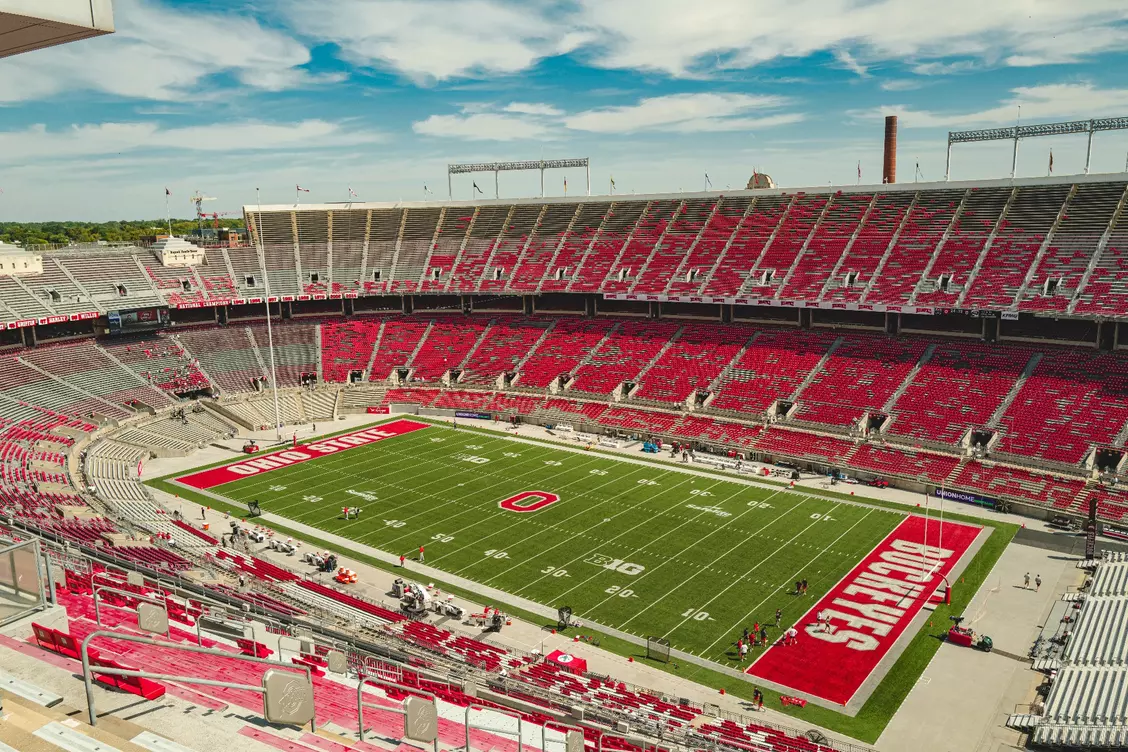
Capacity: 102,780 Spectators
Located in Columbus, Ohio, this arena features a unique horseshoe-shaped architectural design, which gave rise to the iconic nickname “The Horseshoe.” As the home of the Ohio State Buckeyes, this stadium boasts a long history, including the achievement of exceeding 110,000 spectators during intense rivalry games against Michigan. Beyond the American football season, Ohio Stadium also serves as a venue for world-class international artists and various international soccer matches.
4. Kyle Field
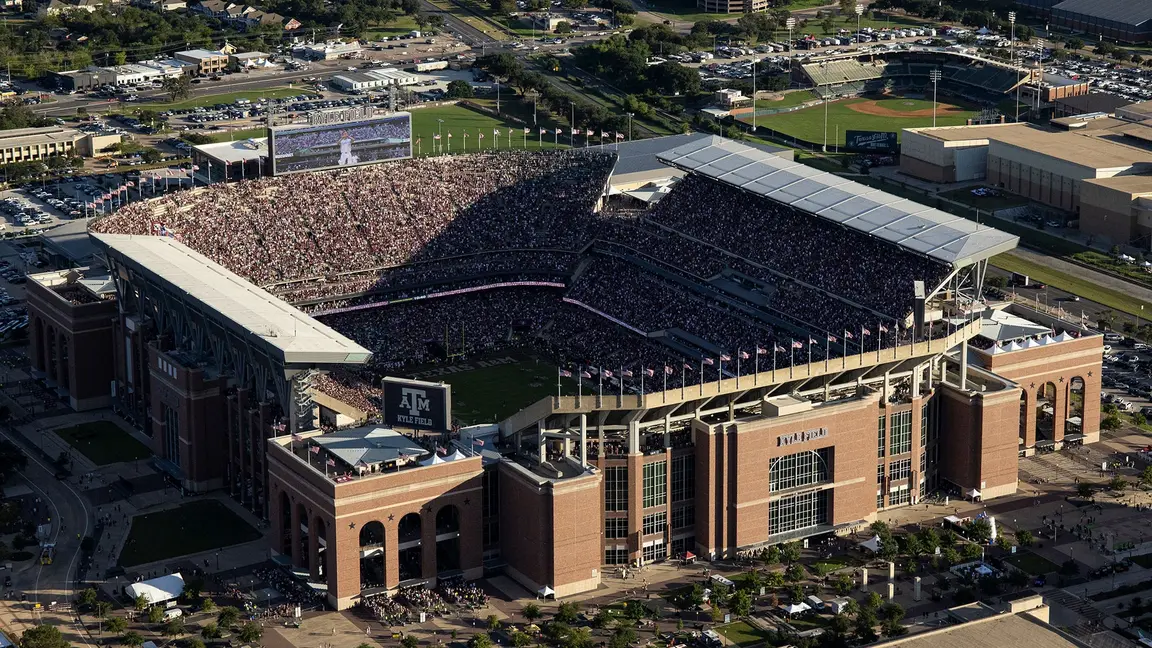
Capacity: 102,733 Spectators
Situated in College Station, Texas, Kyle Field is the proud home of the Texas A&M Aggies, known for its highly vocal fan base. This stadium underwent major renovation projects from 2014 to 2015 that pushed its capacity to 106,000, before being adjusted back to 102,733 seats for comfort purposes. The arena holds a phenomenal attendance record from hosting Ole Miss in 2014, demonstrating the high enthusiasm of the local community.
5. Tiger Stadium
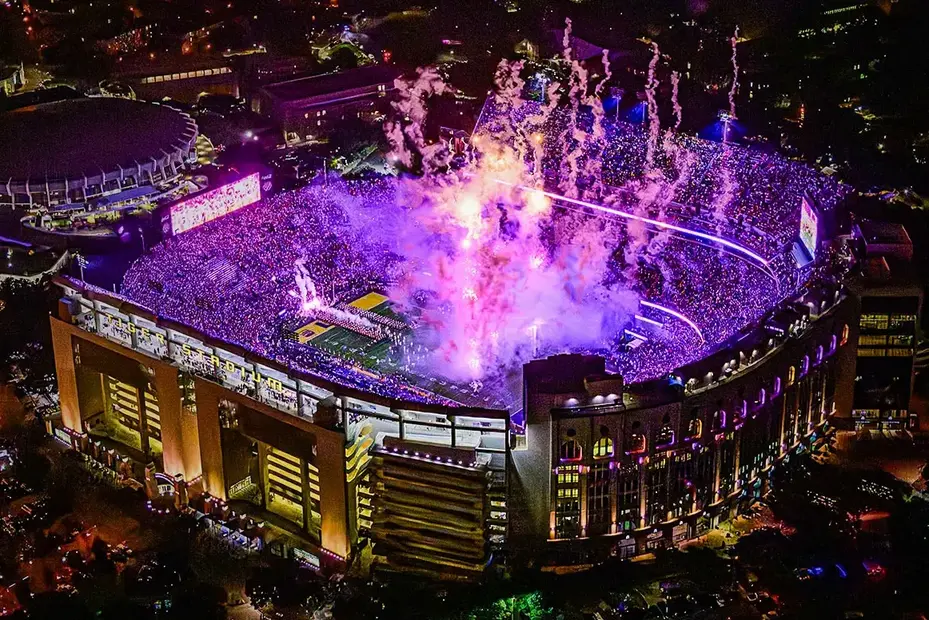
Capacity: 102,321 Spectators
Located in Baton Rouge, Louisiana, this arena serves as the main home of the LSU Tigers and is recognized as one of the most intimidating places for visiting teams. This reputation led to the nickname “Death Valley,” especially when games are held at night with the deafening roars of the spectators. Through a major expansion project in 2014, this stadium’s capacity successfully exceeded 100,000 spectators, cementing its position among the elite sports arenas of America.
6. Neyland Stadium
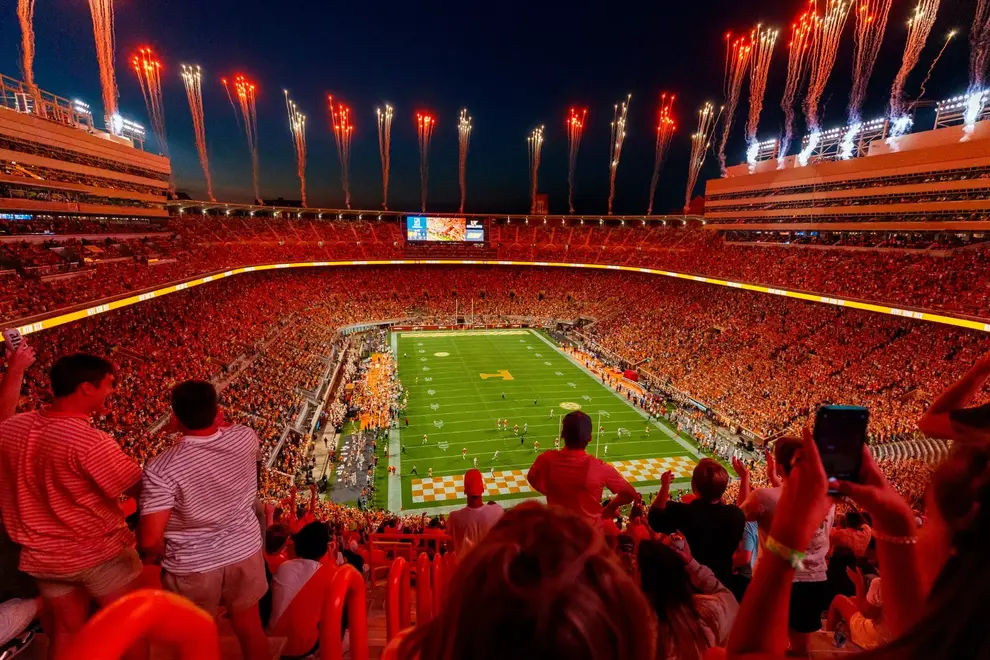
Capacity: 101,915 Spectators
Neyland Stadium is the main home of the Tennessee Volunteers, strategically located on the banks of the Tennessee River in the city of Knoxville. Its unique geographical location allows fans to practice the “Sailgating” tradition, gathering and celebrating on boats before the game begins. Historically, this arena once recorded an attendance of 109,061 spectators in 2004, before capacity adjustments were made to integrate modern facilities for visitor comfort.
7. Darrell K Royal–Texas Memorial Stadium
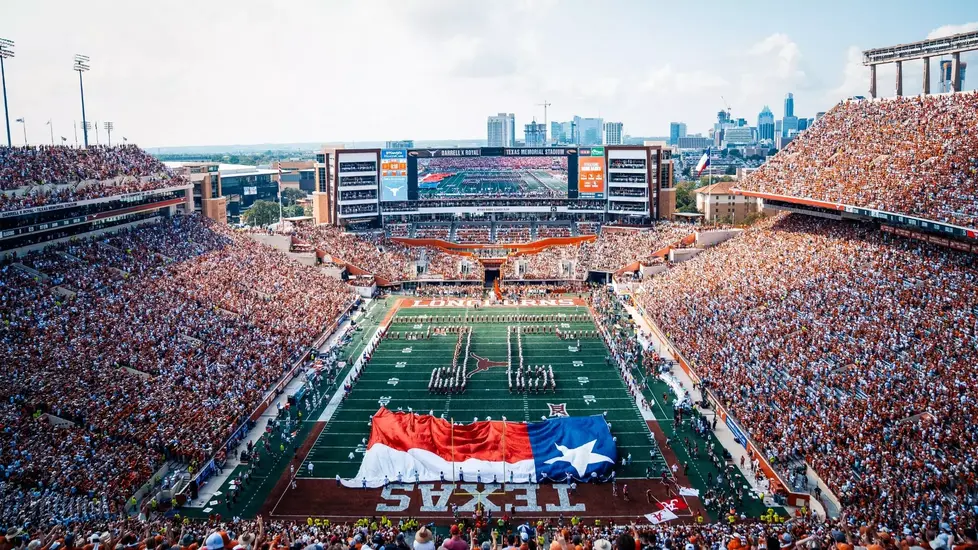
Capacity: 100,119 Spectators
Located in Austin, Texas, this magnificent stadium is home to the Texas Longhorns and serves as a symbol of sports pride in the region. Unlike other classic NCAA arenas, this stadium stands out thanks to its integration of modern facilities and premium areas that provide an exclusive viewing experience. Its popularity continues to grow, as evidenced by the recent attendance record of 105,215 spectators during a crucial game in October 2024.
Read more: 7 Iconic Stadiums in America
Conclusion
Exploring the list of massive arenas in the United States provides a new perspective on how university-level sports culture can surpass the scale of professional industries. Alumni loyalty, strong campus traditions, and community support form the foundation for the establishment of these stadiums with capacities exceeding 100,000 spectators. Ultimately, the grandeur of this sports infrastructure is not merely a matter of alma mater pride, but a tangible representation of a living community ecosystem that continues to thrive and develop from generation to generation.
If you’re interested in learning more about architectural structures and design, don’t miss our article on the 11 iconic American buildings you should know. Additionally, for a more comprehensive travel experience, check out our guide to the top 10 most popular national parks in America.