

When we talk about “the highest mountain,” Indonesians usually think of Puncak Jaya in Papua or the majestic Mount Rinjani in Lombok. But did you know that on the other side of the Pacific Ocean, the United States holds a lineup of giants that are far taller, some of them even coming close to rivaling the Himalayas? What’s even more surprising is that all 10 of the highest mountains in the United States are found in a single state: Alaska!
If you’re into hiking, curious about world geography, or simply want to expand your knowledge before planning a bucket-list adventure to America, here’s the complete list below.
List of the Highest Mountains in the United States
1. Mount Denali — 6,190 meters (20,310 feet)
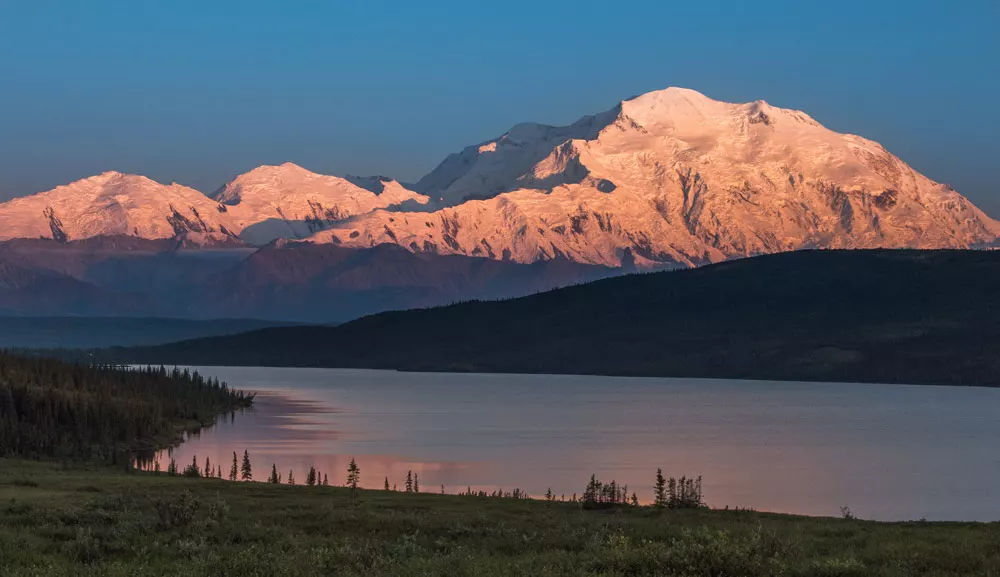
Formerly known as Mount McKinley, Denali is the highest mountain in all of North America, not just the United States. Located in Denali National Park, Alaska, its height is equal to about two-thirds that of Mount Everest. The name “Denali” comes from the Koyukon language and means “the tall one,” and it officially replaced the name McKinley in 2015.
2. Mount Saint Elias — 5,489 meters (18,008 feet)
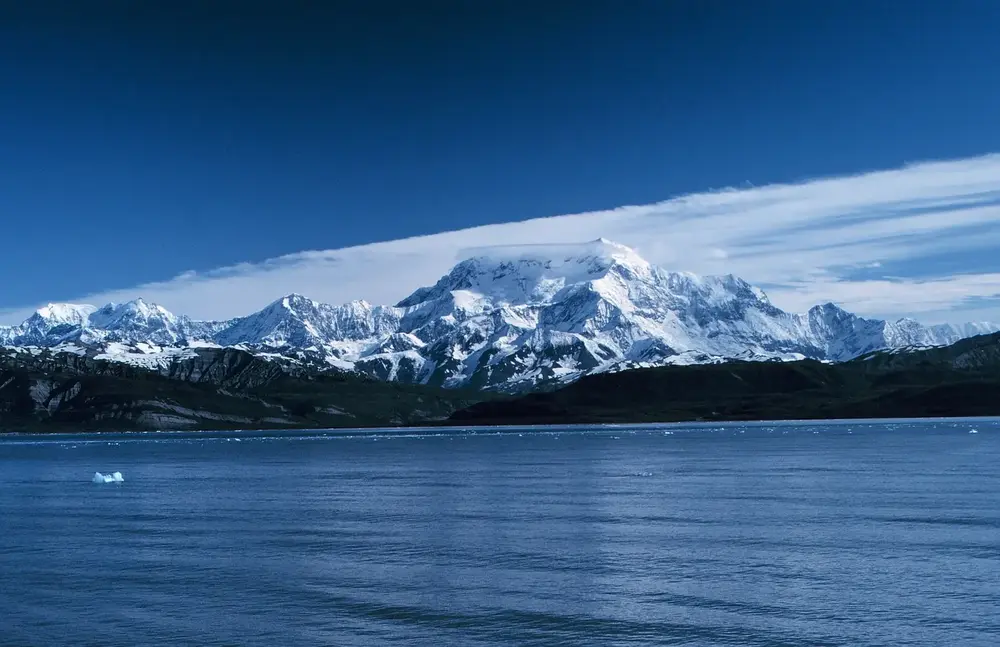
This mountain has one of the most dramatic cliff faces in the world. It rises nearly 5,500 meters within a distance of only about 16 km from the coastline. Located on the Alaska-Yukon border, inside Wrangell-St. Elias National Park, the largest national park in the United States. This peak was first successfully summited in 1897 by an expedition led by Prince Luigi Amedeo of Italy.
3. Mount Foraker — 5,304 meters (17,400 feet)
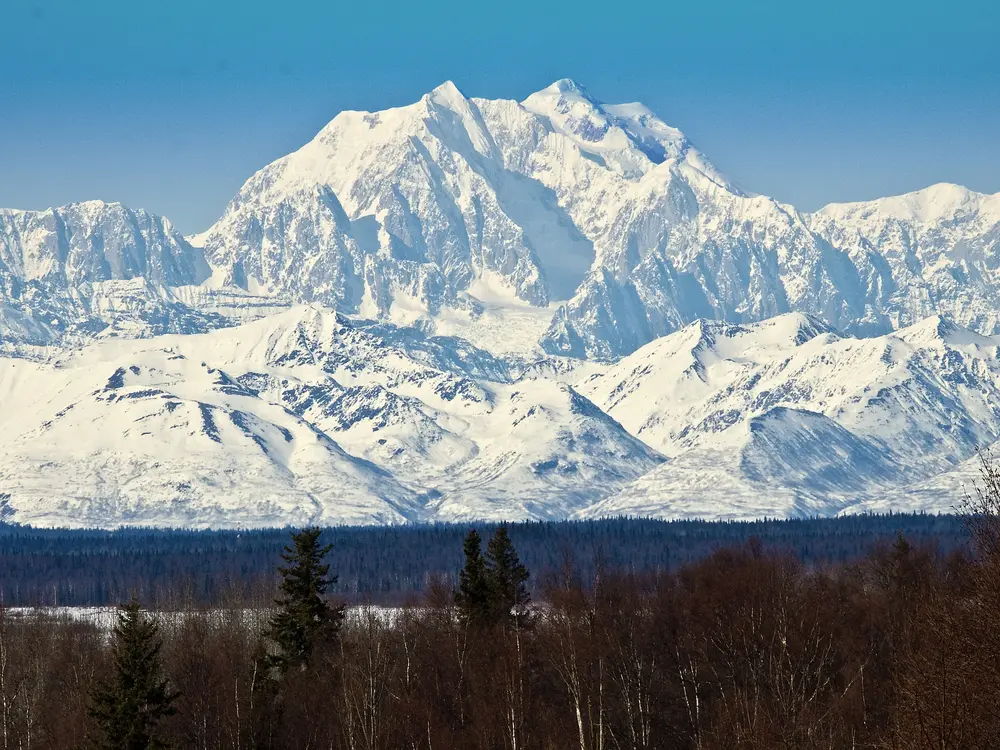
Standing right beside Denali, this mountain is often overshadowed even though it’s also a formidable giant in its own right. Indigenous Alaskans nicknamed it “Sultana,” or “the wife,” because of its close geographic proximity to Denali. It towers over the Kahiltna Glacier, which spans roughly 200 square miles, and was first successfully climbed in 1934.
4. Mount Bona — 5,044 meters (16,550 feet)
A volcanic mountain blanketed in permanent ice, making it one of the most isolated peaks in Alaska. Bona is the highest volcano in the United States, though its last eruption is believed to have occurred thousands of years ago, leaving it completely dormant today. Its ice feeds the Klutlan and Russell glacier systems, two massive glaciers that stretch all the way into Canada’s Yukon region. Its first ascent was recorded in 1930 by a team led by Allen Carpé.
5. Mount Blackburn — 4,996 meters (16,390 feet)
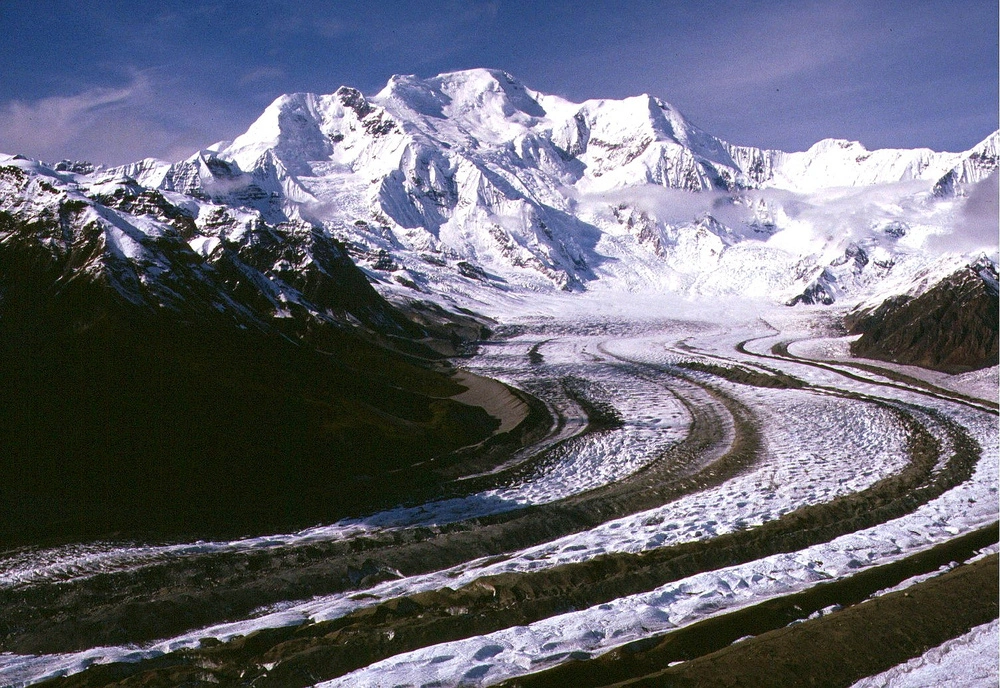
Part of the Wrangell Mountains, this mountain is also the remnant of an ancient volcano. Blackburn is the highest peak in the entire Wrangell range and is the main source of the Kennicott Glacier, which flows toward the small town of McCarthy. Unpredictable weather and terrain riddled with crevasses keep this mountain a serious challenge even for experienced climbers. The first ascent of its main summit wasn’t recorded until 1958, long after its eastern summit was climbed in 1912.
6. Mount Sanford — 4,949 meters (16,237 feet)
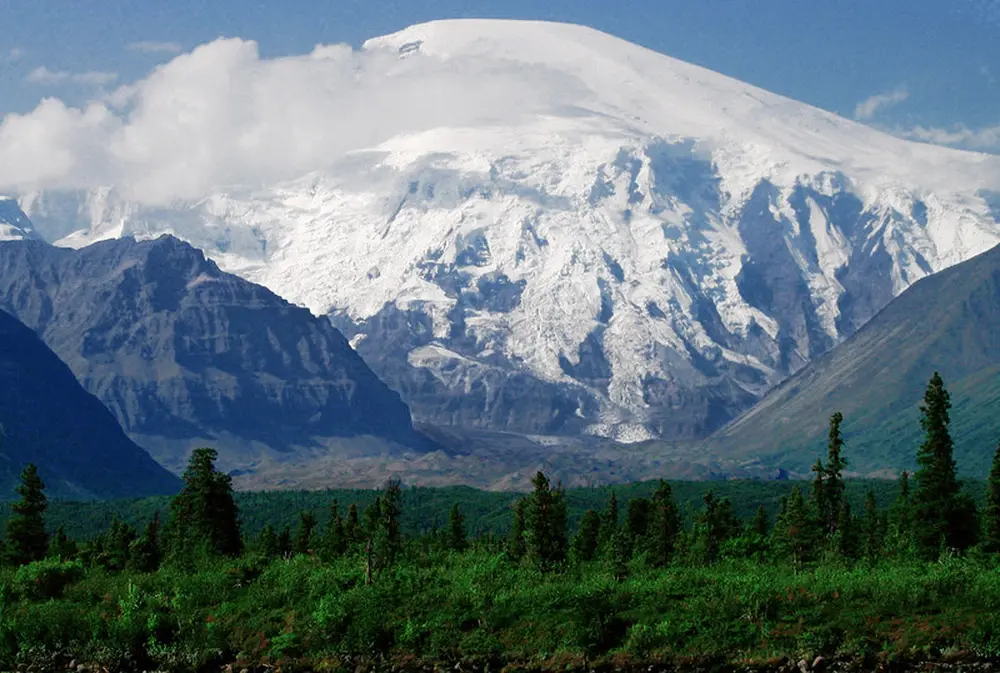
One of the largest shield volcanoes in the world by volume. Sanford sits in the Wrangell Volcanic Field near the Copper River, known for its salmon runs. The mountain’s south face has one of the steepest gradients in North America, rising roughly 2,400 meters within just one mile. It was first successfully climbed in 1938 by legendary mountaineers Terris Moore and Bradford Washburn.
7. Mount Fairweather — 4,671 meters (15,325 feet)
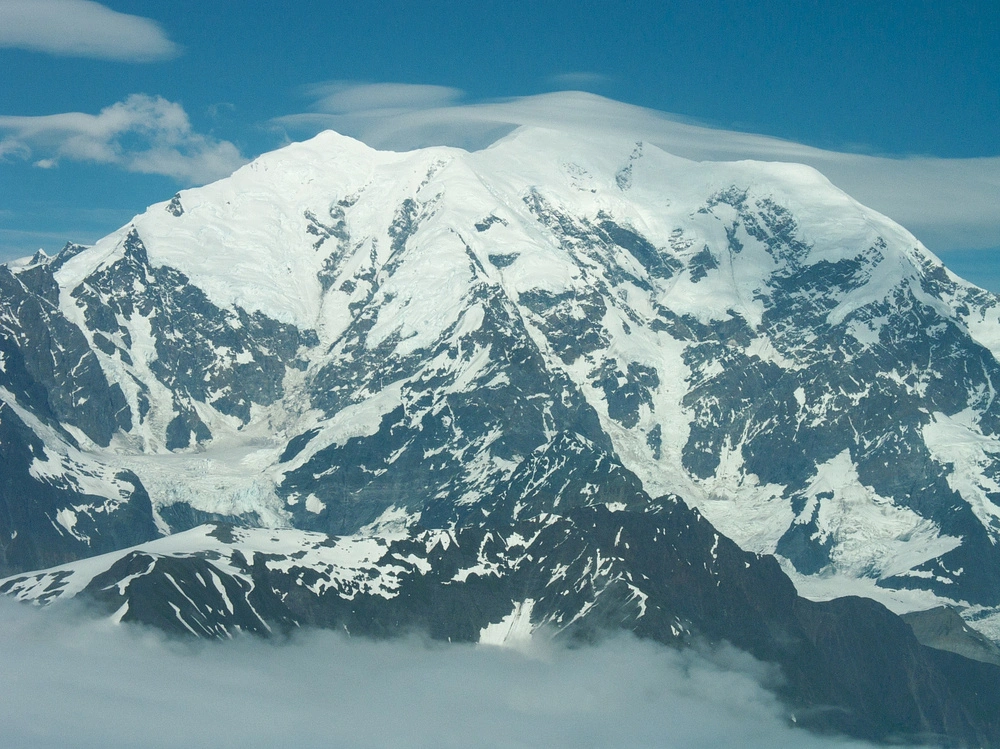
An ironic name, since this mountain is actually notorious for extreme weather and heavy snowfall. It was named “Fairweather” by Captain James Cook in 1778, when he happened to spot it on one of the region’s rare clear days. The mountain stands within Glacier Bay National Park and is also the highest point in the province of British Columbia, Canada. Its first ascent wasn’t achieved until 1931, after a grueling struggle against fierce winds and snowstorms.
8. Mount Hubbard — 4,557 meters (14,951 feet)
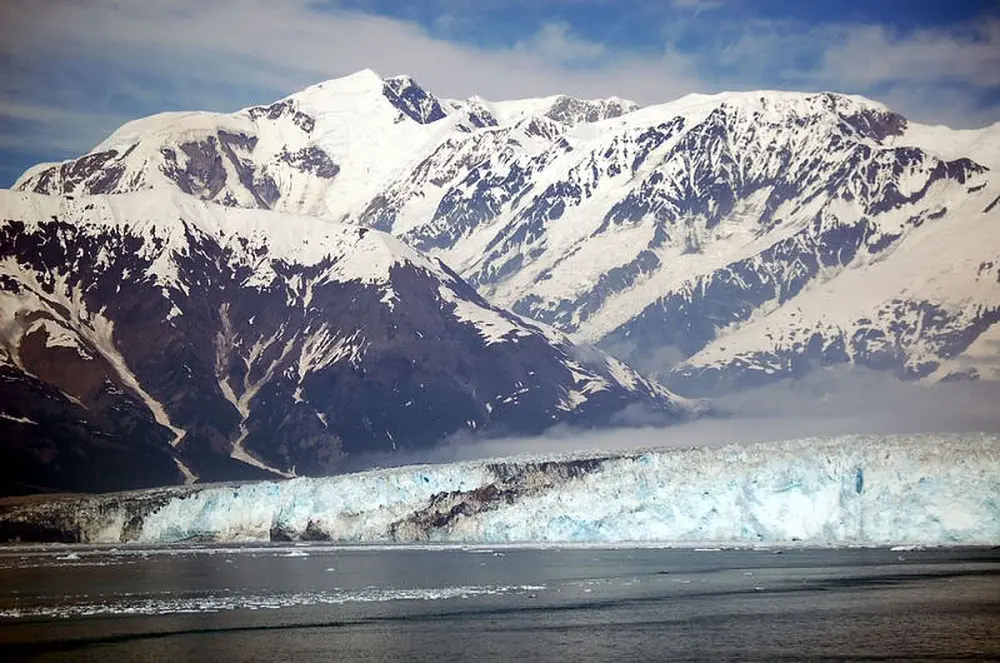
Located on the Alaska-Yukon border, this mountain feeds the Hubbard Glacier, one of the most active glaciers in the world. It was named after Gardiner Greene Hubbard, the first president of the National Geographic Society, in honor of his contributions to geographic exploration. Hubbard has three distinct summits, with the highest point actually located on the Canadian side. Its steep terrain and unpredictable weather make it one of the most difficult mountains to climb in North America.
9. Mount Bear — 4,520 meters (14,831 feet)
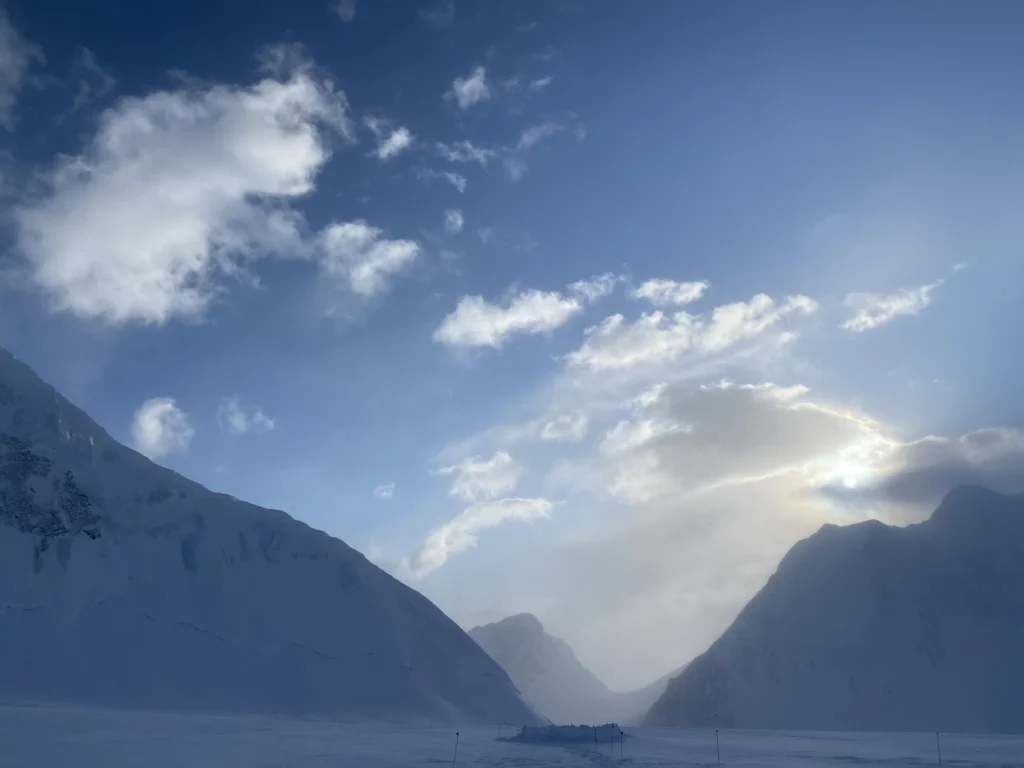
A remote peak rarely climbed due to how difficult it is to access. Mount Bear sits within the Saint Elias Mountains, right along the border between Alaska and Canada’s Yukon region. Its extreme isolation means this mountain has seen far less climbing activity than the other peaks on this list. The lack of documented ascents only adds to its air of mystery among Alaska’s giants.
10. Mount Hunter — 4,442 meters (14,573 feet)
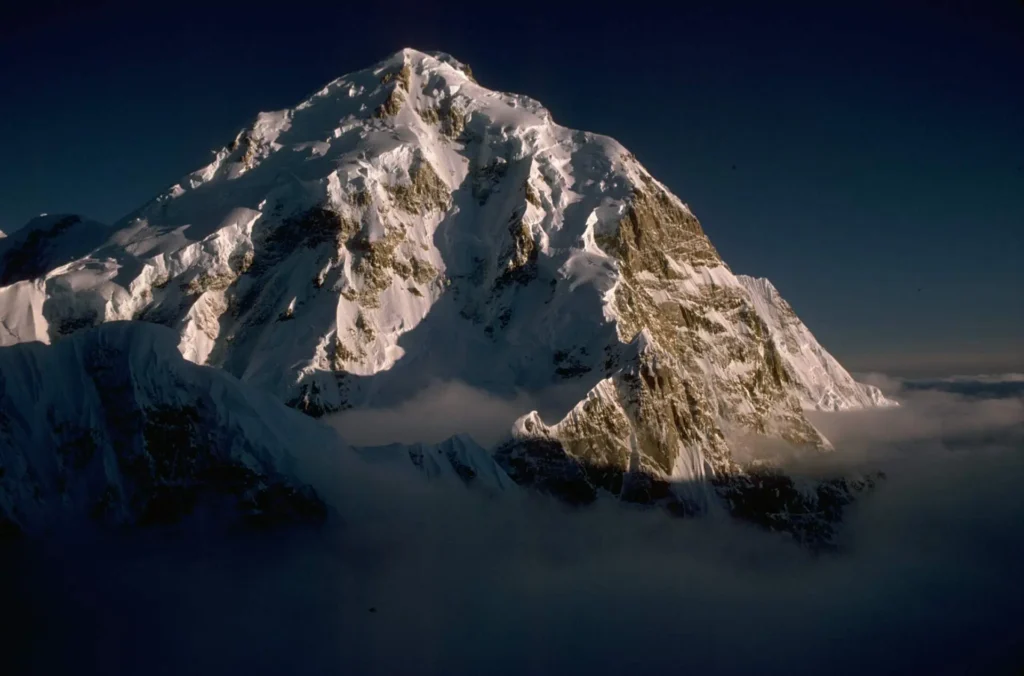
Even though it ranks 10th on this list, this mountain is considered one of the more challenging climbs in all of North America. In the Dena’ina language, it’s called “Begguya,” meaning “child of Denali,” since it sits only about 13 km from its towering neighbor. Its steep walls and sharp, corniced ridges make it technically harder to climb than Denali itself, despite being much shorter. Its first ascent wasn’t achieved until 1954, by the legendary climbing trio Fred Beckey, Heinrich Harrer, and Henry Meybohm.
Fascinating Facts Behind These Towering Peaks
- They’re all in Alaska, not the mainland U.S.
Although Alaska is officially part of the United States, it’s geographically separate from the other 48 contiguous states, the region known as the contiguous United States, or the Lower 48. If you only count the highest mountain within those 48 states (excluding Alaska and Hawaii), the winner is Mount Whitney in California, at 4,421 meters. But once Alaska is factored in, Whitney falls far behind, even the shortest mountain in the top 10 above is still taller than it. - Denali isn’t just tall above sea level.
Measured from base to peak, Denali actually has a greater vertical rise than Everest. That’s because Denali rises almost directly from the lowlands around it, while Everest already “starts” its climb from the Tibetan Plateau, which itself sits thousands of meters above sea level. - Many of them were born from volcanoes.
Mount Sanford, Mount Blackburn, and Mount Bona are all remnants of volcanic activity along the Pacific Ring of Fire, the very same volcanic belt that runs through Indonesia! Even so, all three have long been inactive and are now known more as climbing destinations than eruption risks. - Some have barely ever been climbed.
Mount Bear and Mount Hubbard have such extreme climbing routes that only a handful of professional climbers have ever reached their summits. Wildly shifting weather and their remote locations mean these two mountains rarely make it onto climbers’ annual expedition lists. - A national park of epic scale.
Wrangell-St. Elias National Park, home to five of these ten mountains, spans more than 13 million acres. That’s larger than nine U.S. states combined!
Tips If You Want to Visit or Climb
Climbing these mountains is no small feat, this is serious, professional-level mountaineering, not casual hiking. But if you’re drawn to this region, whether to climb or simply take in the scenery, here are a few tips:
- Know your level. Most of the peaks on this list require technical mountaineering experience, including ice climbing skills and glacier navigation. Beginners can still enjoy the scenery from a distance via a flightseeing tour around Denali.
- Set aside extra time and budget. A Denali expedition alone typically takes 2–3 weeks, with permit and logistics costs that aren’t cheap.
- Pay attention to the season. The main climbing season in Alaska generally runs from May to July, when the weather is relatively more stable, though still extreme.
- Use a certified guide. Given the harsh terrain and risk of altitude sickness, climbs should always be done with an experienced guide and official national park permits.
- Invest in the right gear. Extreme cold and strong winds make high-quality cold-weather gear essential, not optional.
- Don’t forget travel and evacuation insurance. Many routes in this region are extremely remote, so emergency assistance can take a long time to arrive.
Conclusion
From the towering grandeur of Denali to the nearly untouched Mount Bear, this lineup of the highest mountains in the United States proves that America’s wilderness is wilder and more breathtaking than we might imagine. For nature lovers, geography enthusiasts, or anyone who simply enjoys adventure stories from the other side of the world, we hope this list has added to your knowledge and sparked your excitement to keep exploring!
Want to discover more stories, culture, and opportunities about the United States? Come check out the exciting programs and events at @america!
From cultural discussions and film screenings to workshops and sessions on studying and living in the U.S., all free to join. Keep an eye on the latest event schedule and sign up now on @america’s official website or social media!