

Many Indonesian students who dream of studying in America often begin with curiosity about legendary campuses whose names are already familiar.
But did you know that some of these universities are more than three centuries old, far older than the 1776 Declaration of Independence?
In this article, we explore the oldest universities in the United States, from Harvard and Yale to Columbia, along with their founding stories, what makes each one distinctive, and why they still shine today.
List of the Oldest Universities in the United States
Before we begin, one note: “oldest” does not always have a single answer. Some schools count their age from the day their first school opened, while others count from an official charter or from the point they became a full college. The list below follows the founding year each institution claims for itself.
1. Harvard University (1636)
Harvard, in Cambridge, Massachusetts, was founded in 1636 by a vote of the Massachusetts Bay Colony’s legislature, making it the oldest institution of higher education in the United States. It took its name in 1639 to honor clergyman John Harvard, who left his library and part of his estate to the school.
It once trained mainly ministers; today Harvard is known for its research, law, medicine, and business programs. As a member of the Ivy League, Harvard has produced many notable figures, including Presidents John F. Kennedy and Barack Obama. For international students, financial planning matters, so start by understanding the tuition costs at Harvard University and the financial aid available.

2. The College of William and Mary (1693)
Located in Williamsburg, Virginia, this school was founded in 1693 through a royal charter, and the charter is where the name William and Mary comes from. As a public university, it shows that state-funded schools can also be very old, and its quality has even earned it the nickname “Public Ivy.”
Three U.S. presidents studied here: Thomas Jefferson, James Monroe, and John Tyler. In 1776, its students also founded Phi Beta Kappa, an academic honor society now recognized across America.
3. St. John’s College (1696)
St. John’s College in Annapolis, Maryland, began as King William’s School in 1696 and officially became St. John’s College in 1784. This small school is famous for its Great Books program: every student studies classic works from ancient Greece to the modern era, with no conventional majors. Classes are discussion-based seminars rather than one-way lectures. Its second campus in Santa Fe, New Mexico, opened in 1964 with the same curriculum.
4. Yale University (1701)
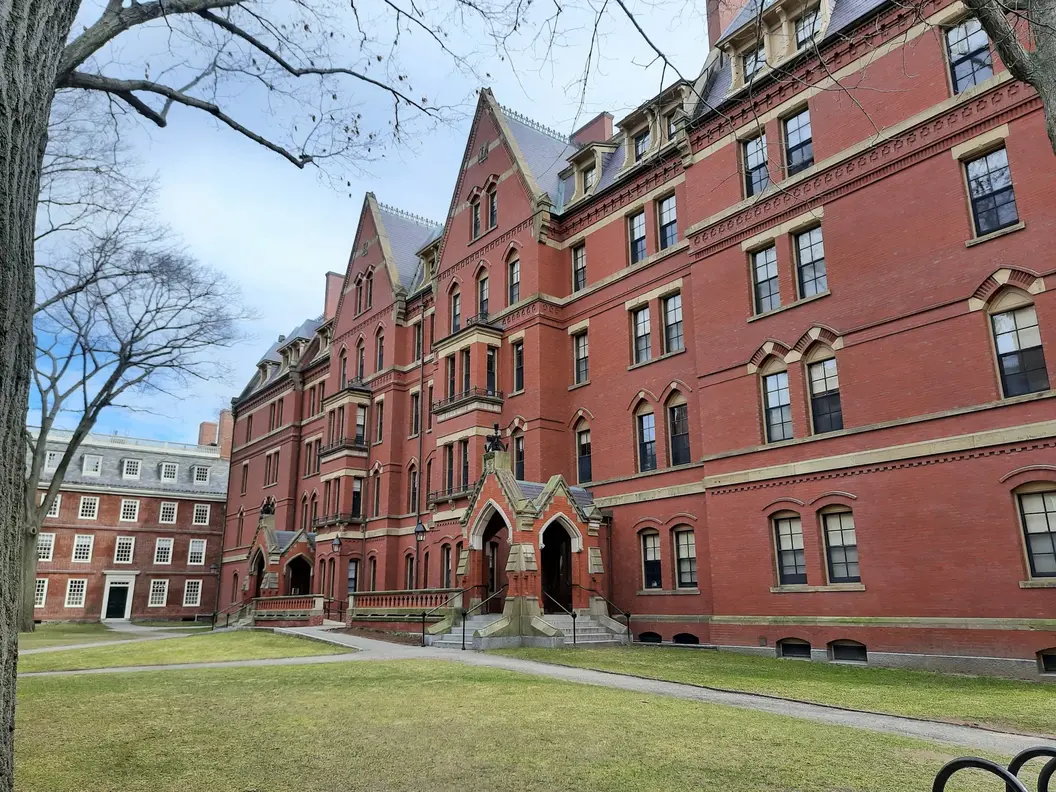
Yale began as the Collegiate School, founded in 1701 in Connecticut, and moved to New Haven in 1716. In 1718, it was renamed to honor donor Elihu Yale.
The university is known for its residential college system, in which students live in small communities within the university, and for strengths in law, the arts, and drama. Several U.S. presidents, including William Howard Taft, George H. W. Bush, and Bill Clinton, graduated from Yale.
5. University of Pennsylvania (1740)
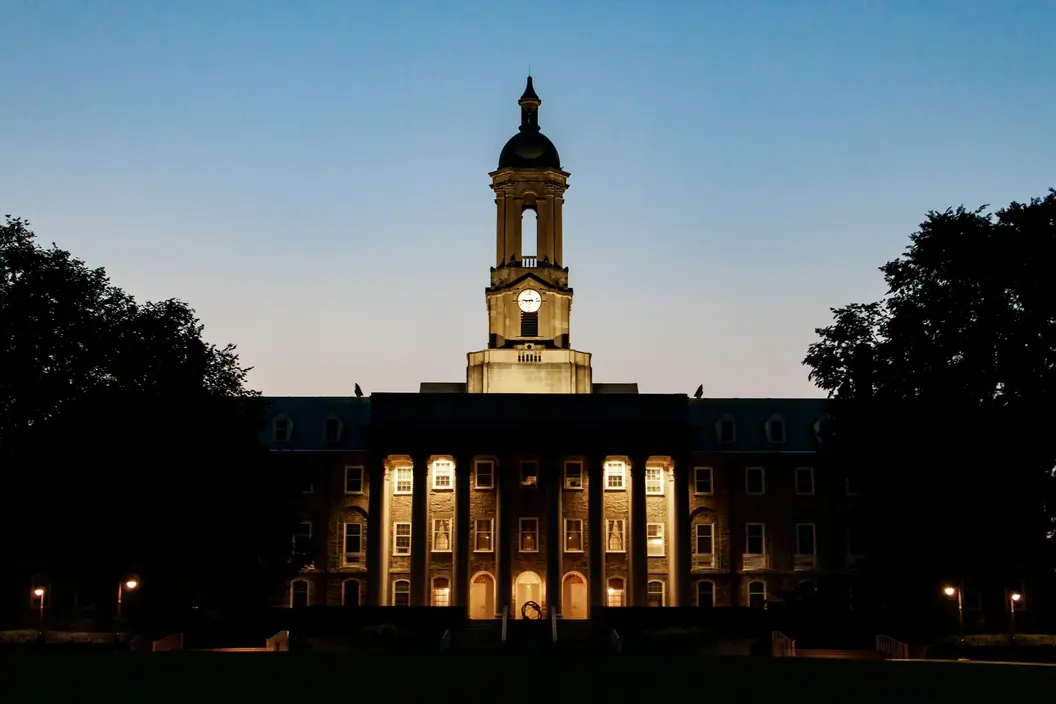
Based in Philadelphia, the University of Pennsylvania (Penn) cites 1740 as its founding year and names Benjamin Franklin as its founder.
Franklin promoted an education that combined academic learning with practical skills, an idea still felt today. Penn opened the first medical school in the American colonies in 1765, and its Wharton School is recorded as the first collegiate business school in the world, founded in 1881. Penn is also part of the Ivy League.
6. Moravian College (1742)
Moravian, in Bethlehem, Pennsylvania, traces its roots to a girls’ school opened by the Moravian community in 1742.
The school claims to be the sixth-oldest college in the United States. It is worth noting that this early school was closer to a primary or secondary school, and full college status came later, which is why the claim is often debated.
In 2021, its name changed from Moravian College to Moravian University, though many people still use the old name.
7. University of Delaware (1743)
The University of Delaware in Newark, Delaware, began as a small school founded by minister Francis Alison in 1743 and moved to Newark in 1765. It became Newark College in 1833 and took the name University of Delaware in 1921. Although it has private roots, it is now a land-grant university supported by the state. One of its graduates is Joe Biden, the 46th president of the United States.
8. Princeton University (1746)
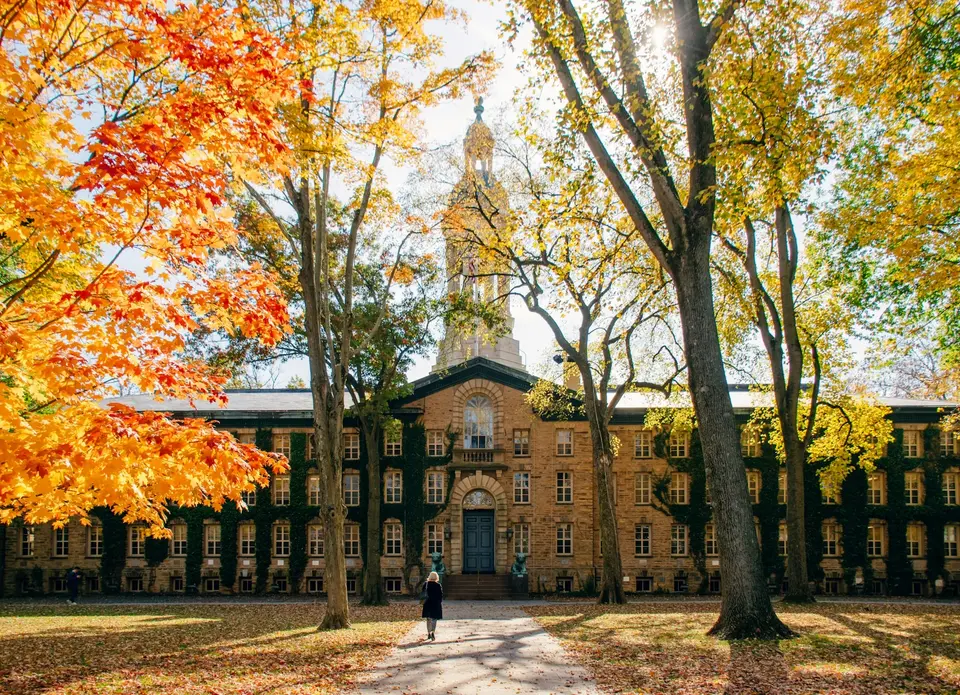
Princeton was founded in 1746 as the College of New Jersey, moved to the town of Princeton in 1756, and adopted the name Princeton University in 1896.
Its Nassau Hall once hosted the Continental Congress in 1783, when the United States was still very young. Princeton is known for its focus on undergraduate education, including a required senior thesis for every graduating student. Presidents James Madison and Woodrow Wilson are among its alumni. Princeton is also an Ivy League member.
9. Washington and Lee University (1749)
Starting out as Augusta Academy in 1749, this school in Lexington, Virginia, changed names several times. George Washington gave a major gift in 1796, which is why his name was adopted, and after the Civil War, Robert E. Lee led the school as its president. The name Washington and Lee became official in 1870. Today, this small school is known as a liberal arts institution with a well-regarded law school and journalism program.
10. Columbia University (1754)
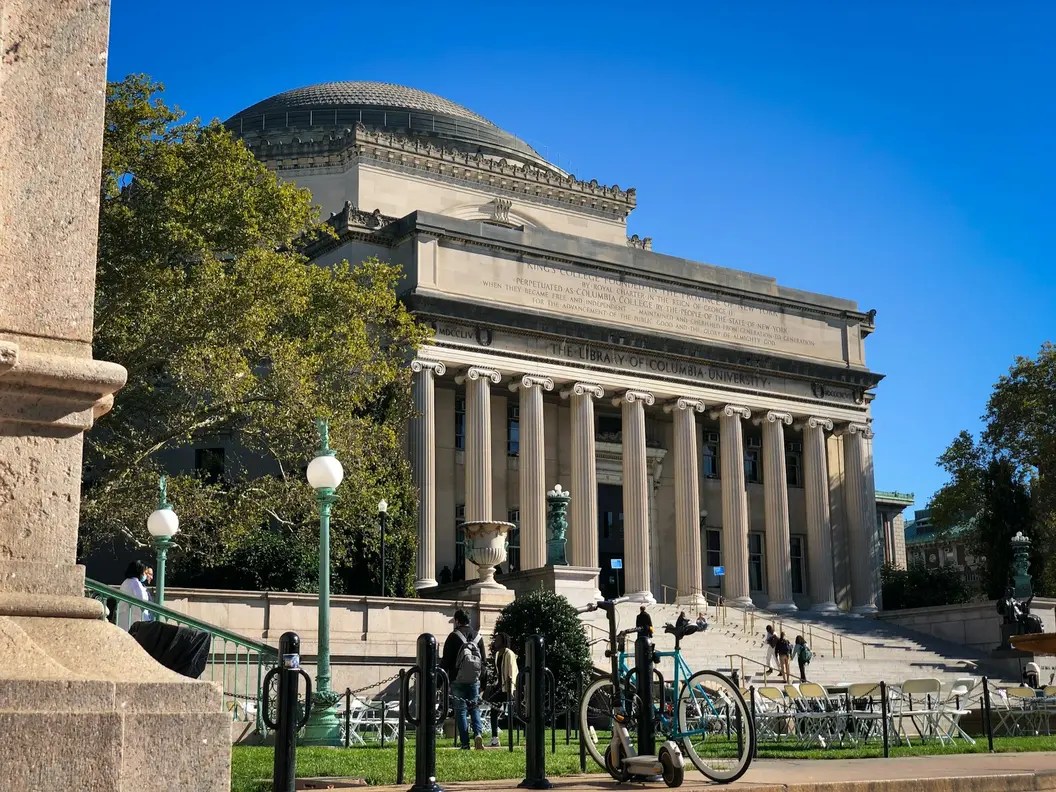
Columbia, in Manhattan, New York City, was founded in 1754 as King’s College, became Columbia College in 1784, and then Columbia University in 1896.
Its alumni include Alexander Hamilton, John Jay, and Supreme Court Justice Ruth Bader Ginsburg. Columbia also administers the Pulitzer Prizes, among the most prestigious awards in American journalism and literature. This Ivy League school is known for its Core Curriculum, a set of required courses for undergraduates.
What Keeps These Universities Relevant Today?
Age alone does not make a university excellent. Many of the best universities in America were founded much later, such as MIT and Stanford, which both began in the 19th century. The key is that these older schools keep renewing themselves without losing their identity. Several things help them endure:
- Adaptability. Harvard and Yale once trained ministers; today both are research hubs spanning an enormous range of fields. A school that survives for more than three centuries has surely rewritten its curriculum many times.
- Financial strength and alumni networks. Strong endowments and alumni giving let these schools fund laboratories, libraries, and aid programs, including scholarships. For prospective Indonesian students, scholarships are one door worth exploring on the way to studying at campuses like these.
- A distinctive academic identity. The Great Books at St. John’s, the senior thesis at Princeton, the Core Curriculum at Columbia, and the residential colleges at Yale show that a consistent identity can be a long-term strength.
- A role in the nation’s history. From Jefferson and Madison to Hamilton, many of the people who shaped the United States studied at these campuses. That reputation attracts top students and researchers, who in turn keep the quality high.
- A global community. These schools welcome students from many countries and build cross-cultural networks, something that matters more and more in a connected world.
Summary
From Harvard in 1636 to Columbia in 1754, these ten campuses show that American higher education has grown alongside the nation itself. They endure not because of their age, but because they were willing to change while staying true to their academic values. Perhaps their stories will spark your own study plans.
Explore More with @america!
Curious about campus life in the United States and want to learn more? Join the exciting events at @america, from education talks and workshops to cultural activities open to the public. Check the latest schedule on the official @america website and social media, then sign up. See you at @america!